The Long Haul Back: How a Brutal Freight Recession Reshaped Truck Financing, Fleet Survivability, and the Used Equipment Market

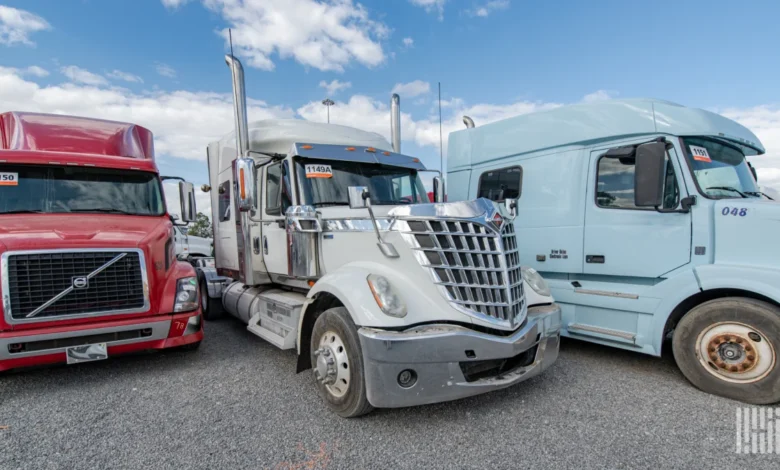
The North American commercial trucking industry is emerging from one of the most punishing and protracted downturns in modern supply chain history. For three and a half years, a relentless freight recession squeezed motor carriers from all directions, depressing spot rates, inflating operating costs, and choking off liquidity. This prolonged economic contraction did not merely test the resilience of trucking companies; it fundamentally reengineered the financial ecosystem that supports them. Simultaneously, it inflicted severe damage on the credit profiles of carriers most in need of capital and triggered a mass exodus of traditional lenders from the transportation sector.
Today, the lingering effects of this contraction are directly rationing the long-awaited equipment replacement cycle. While equipment demand is finally showing signs of life, the structural composition of the lending market and the financial health of the carrier base look vastly different than they did during the pandemic-era freight boom. Navigating this landscape requires a sophisticated understanding of asset valuation, strict expense management, and a stark realization that the rules of commercial truck financing have permanently changed.
To understand how the trucking finance market reached its current juncture, one must examine the unprecedented market dynamics that preceded the crash. The roots of the recent crisis trace back to the extraordinary economic distortions of 2020 through early 2022. Driven by massive pandemic stimulus, a sudden pivot in consumer spending toward physical goods, and severe global supply chain bottlenecks, demand for freight services skyrocketed. Shippers scrambled for capacity, pushing spot rates to historic highs and generating windfall profits for motor carriers of all sizes.
This gold-rush environment triggered a massive influx of new market entrants. Attracted by high revenue potential, thousands of aspiring owner-operators and small fleets rushed to secure their own operating authorities. According to industry data, the surge in demand coincided with severe manufacturing constraints for new Class 8 trucks due to microchip shortages and component bottlenecks. Consequently, the commercial vehicle market entered an unprecedented asset bubble.
In early 2022, the market valuation of used commercial trucks detached entirely from historical norms. Over the eleven-year span between the Great Recession and the COVID-19 pandemic, a typical four-year-old sleeper tractor consistently sold at auction within a stable band of $30,000 to $50,000, according to historical data from J.D. Commercial Truck Guidelines. By early 2022, that exact asset class peaked at a staggering $118,000—representing a monumental 136% surge over the highest pre-pandemic peak in modern tracking history.
Lenders caught in the enthusiasm of the market frequently financed these vehicles at inflated values, often locking in loans around $110,000 for trucks that historical data suggested were fundamentally worth less than half that amount. When the macroeconomic tide turned—marked by cooling consumer demand, persistent inflation, and rising interest rates—the freight market rolled over into a historic recession that refused to relent.
While typical freight cycles historically correct within 12 to 18 months, the recent downturn stretched across an agonizing 42 months. This extended duration compounded financial distress across the supply chain, turning what normally would have been a cyclical correction into an existential purge.
The casualties of this prolonged downturn were concentrated heavily among the least experienced operators. Data from industry leaders highlights a staggering attrition rate: on average, 85% of motor carriers with fewer than two years of operating experience and their own operating authority failed over a sustained three-year stretch of the downturn. Many of these newer entrants had capitalized their businesses during the height of the asset bubble, acquiring expensive equipment with minimal cash reserves and little experience managing through a down cycle.
As freight volumes contracted and spot rates plummeted, these carriers quickly found themselves unable to service their debt obligations. The resulting unwind manifested as a tidal wave of commercial vehicle repossessions. Fleets collapsed in droves, flooding the secondary market with used inventory and accelerating the deflation of the asset bubble. ACT Research data indicates that average Class 8 retail prices have since settled down to approximately $60,986, forcing lenders and remaining carriers to reckon with severe depreciation losses.
Despite the systemic risks posed by the asset bubble, a select group of financial institutions maintained their commitment to the sector. Mitsubishi HC Capital America was among the prominent lenders that chose to stay active throughout the entire downturn. Kirk Mann, executive vice president and general manager of the company’s transportation vendor solutions business, spent the recession actively financing trucks and observing the market’s contraction firsthand.
In interviews reflecting on the period, Mann acknowledged the immense scale of the asset bubble. He recalled sitting in the company’s Chicago offices alongside Wayne Pass, the chief credit officer for vendor solutions who has since retired, evaluating the true market value of a standard Freightliner Cascadia 13-speed with a tall sleeper and under 500,000 miles. Both seasoned executives independently estimated the real-world value at $45,000—even as the company was actively financing comparable units at $110,000.
Despite recognizing the obvious inflationary risk, leadership made a strategic decision to remain a liquidity provider in the space. The rationale was clear: to signal steadfast market presence and maintain vital relationships with truck dealers and fleet customers through the storm. While Mann has noted that, in hindsight, the firm might have structured its risk exposure differently, the strategy successfully positioned the company as one of the few reliable capital sources remaining as traditional banks retreated from the sector.
The mass withdrawal of commercial banks and mainstream lenders significantly altered the competitive landscape. Today, the remaining field of transportation lenders is largely populated by original equipment manufacturer (OEM) captive finance arms, a select few large independent finance companies, and a handful of bank-led specialty groups. This contraction in the lender pool has created a perceived credit squeeze across the industry, though financial institutions maintain that their fundamental underwriting criteria have not inherently tightened.
Instead, the baseline credit profiles of borrowers underwent significant deterioration over the three-and-a-half-year downturn. While prime lenders continue to evaluate risk through traditional metrics, the prolonged absence of profitability degraded the balance sheets of many small and mid-sized carriers. Consequently, the cost of capital has become sharply stratified, reflecting the varying degrees of financial damage absorbed by different segments of the industry.
Today, borrowing costs vary wildly depending on creditworthiness and operational scale. Investment-grade private fleets can secure financing at competitive rates hovering around 5.25%, whereas lower-credit small operators face borrowing costs of 12% or higher, frequently accompanied by demands for substantial cash deposits. Mid-sized fleets operating between 50 and 200 units have increasingly turned to established independent lenders through robust dealer networks to secure necessary capital for fleet modernization.
As the industry slowly transitions from recession recovery to normalization, analysts have closely monitored potential catalysts for an equipment replacement boom. For the past two years, much of the industry anticipated that impending Environmental Protection Agency (EPA) regulations slated for 2027 would trigger a massive pre-buy wave, with fleets rushing to acquire legacy diesel models before stricter emissions standards take effect.
However, industry leaders like Mann view the current uptick in replacement demand through a more pragmatic lens. Rather than a speculative rush driven purely by upcoming regulatory compliance, the current market momentum is primarily fueled by pure, unadulterated replacement demand. Fleets have simply delayed equipment replacement cycles far beyond normal parameters during the downturn and have now reached a psychological and operational tipping point where upgrading aging trucks is no longer optional.
Manufacturing responses to the 2027 EPA mandates remain fragmented. While some OEMs are aggressively developing fully compliant powertrains, others plan to rely on legacy models utilizing banked emissions credits or financial penalties. This divergence has kept future equipment pricing unsettled, discouraging a speculative pre-buy wave of historic proportions.
Even without a regulatory pre-buy frenzy, capital equipment volume through dealer channels has rebounded noticeably. Over-the-road volume at Mitsubishi HC Capital has improved by approximately 30%, propelled primarily by medium and large fleets aggressively modernizing equipment that was held past standard trade cycles. When fleets do commit capital to new equipment, the preference for brand-new assets is overwhelming: approximately 80% of purchases are new vehicles, with late-model used trucks capturing the remainder, provided they remain under warranty and strictly aligned with fleet specifications.
Crucially, this surge in purchasing activity does not represent industry-wide fleet expansion. Commercial truck manufacturers operate under strict production capacity limits, meaning available build slots are rapidly absorbed during early recovery phases. When combining standard historical trade cycles with three years of deferred capital expenditures, the pent-up demand for replacement vehicles significantly outpaces manufacturing capacity.
Furthermore, capacity normalization has been delayed by the unique behavior of private fleets throughout the downturn. Private fleets that experienced contractions in their core retail or manufacturing volume utilized their excess equipment to haul freight in the for-hire market. This dynamic injected unwanted capacity into an already over-saturated market, driving spot rates down further and prolonging the pain for dedicated for-hire carriers. The recent improvement in freight rates and lender health is largely a function of capacity attrition—operators exiting the market—rather than an explosive resurgence in overall freight demand.
For motor carriers seeking to secure financing in the post-recession economy, traditional financial statements no longer guarantee success. Lenders are applying heightened scrutiny to underwriting packages, and a single metric now supersedes all others: a deep, granular understanding of cost per mile.
Lenders working with medium and large fleets emphasize that comprehensive expense visibility is non-negotiable. Fleet operators must be able to articulate exact cost-per-mile metrics across every operational category, including driver compensation, routine maintenance, comprehensive insurance, fuel expenditures, and administrative overhead. If an operator cannot transparently demonstrate mastery over their expense structure, lenders are increasingly unwilling to extend credit, regardless of historical business relationships.
The logic is straightforward: strong revenue generation can no longer mask poor management on the expense side. The era of cheap money and surging spot rates allowed inefficient operators to survive despite loose financial controls. In the current economic climate, survival requires rigorous asset management and analytical discipline.
To adapt, carriers with blemished credit profiles or those that made capital misallocations earlier in the cycle must proactively reconstruct their narrative. Lenders are willing to evaluate turnaround stories, provided operators can present clear, data-driven evidence of operational improvement and cost containment.
The three-and-a-half-year freight recession permanently altered the dynamics of the American trucking landscape. It weeded out unsustainable capacity, recalibrated asset values to realistic levels, and reminded the supply chain that financial discipline is the ultimate prerequisite for longevity. As the industry turns the page toward recovery, the carriers and lenders that endure will be those anchored by rigorous data analytics, disciplined risk management, and an unwavering focus on the bottom line.